Every year, over 4 million test-takers spend $250+ on IELTS exam fees, and according to official IELTS statistics, 67% of them score between Band 6.0 and 6.5-just short of the Band 7.0 required for most university admissions and immigration programs. The IELTS band score system is not just a number: it’s a detailed framework that measures your English proficiency across four distinct modules (Listening, Reading, Writing, Speaking) using specific performance descriptors. Understanding exactly what examiners look for at each band level-and why you’re losing marks-is the first step to finally breaking through that frustrating Band 6.5 plateau.
TL;DR: Key Takeaways on the IELTS Band Score System
- The IELTS band score ranges from 1 to 9, with each band representing a specific level of English proficiency from Non-User to Expert User
- Your Overall Band Score is the average of your four module scores (Listening, Reading, Writing, Speaking), rounded to the nearest 0.5
- Writing and Speaking are scored using four criteria: Fluency and Coherence, Lexical Resource (vocabulary), Grammatical Range and Accuracy, and Task Achievement/Response
- Listening and Reading use conversion charts: Number of correct answers out of 40 determines your band (e.g., 30 correct = Band 7)
- Band 6.5 plateaus happen because of: repetitive vocabulary, poor paragraph structure, grammatical errors that confuse meaning, and lack of examiner-level feedback
- Each band jump (6.5→7.0→7.5) requires exponential improvement in vocabulary sophistication, grammatical accuracy, and idea development
- AI-powered feedback solves the feedback gap: Instant, detailed scoring on all four criteria helps you identify and fix specific weaknesses 10x faster than traditional methods
What Is the IELTS Band Score System?
The IELTS band score system is a 9-band scale (1-9) used to measure and report your English language proficiency across four skills: Listening, Reading, Writing, and Speaking. Each band corresponds to a descriptive level of competence-from Band 1 (Non-User, essentially no ability) to Band 9 (Expert User, complete operational command).

According to the official IELTS scoring guide published by Cambridge Assessment English and IDP Education, the system is designed to provide:
- Consistent, standardized measurement across all test centers worldwide
- Transparent criteria so candidates understand exactly what’s required at each level
- Reliable scores that universities, employers, and immigration authorities can trust
Your Overall Band Score is calculated by taking the average of your four module scores and rounding to the nearest whole or half band. For example:
- Listening: 7.0
- Reading: 6.5
- Writing: 6.0
- Speaking: 7.0
- Overall: (7.0 + 6.5 + 6.0 + 7.0) ÷ 4 = 6.625 → Rounded to 6.5
Importantly, most universities and immigration programs specify minimum scores for individual modules, not just the overall score. For instance, Canadian Express Entry requires CLB 9 (equivalent to IELTS Band 7.0 in Speaking and Listening, Band 7.0 in Reading and Writing) for maximum points.
Understanding the complete IELTS band score system and how each module contributes to your overall result is essential for strategic preparation.
Understanding IELTS Band Descriptors: What Examiners Actually Look For
The 9-Band Scale Explained
Here’s what each band level represents in practical terms:
| Band Score | Descriptor | What It Means |
|---|---|---|
| Band 9 | Expert User | Complete operational command; fully appropriate, accurate, and fluent |
| Band 8 | Very Good User | Fully operational with only occasional inaccuracies or inappropriacies |
| Band 7 | Good User | Operational command with occasional inaccuracies; handles complex language well |
| Band 6 | Competent User | Generally effective command despite inaccuracies; can use and understand fairly complex language |
| Band 5 | Modest User | Partial command; copes with overall meaning in most situations but makes many mistakes |
| Band 4 | Limited User | Basic competence limited to familiar situations; frequent breakdowns in communication |
| Band 3 | Extremely Limited | Conveys and understands only general meaning in very familiar situations |
| Band 2 | Intermittent User | Great difficulty understanding spoken and written English |
| Band 1 | Non-User | No ability to use the language except a few isolated words |
Most test-takers aim for Band 6.5 to 8.0, depending on their immigration, university, or professional requirements. The critical insight: each band represents a significant, measurable jump in language sophistication and accuracy.
IELTS Writing Band Descriptors: Why You’re Losing Marks
IELTS Writing is scored using four equally weighted criteria: Task Achievement (Task 1) or Task Response (Task 2), Coherence and Cohesion, Lexical Resource, and Grammatical Range and Accuracy. Each criterion contributes 25% to your final Writing band score.
The Four Writing Assessment Criteria
1. Task Achievement/Task Response (25%)
- Band 6: Addresses all parts of the task but some parts may be more developed than others. Ideas are relevant but may lack focus.
- Band 7: Addresses all parts with a clear position. Presents, extends, and supports main ideas, but there may be over-generalization.
- Band 8: Sufficiently addresses all parts with a well-developed response. Ideas are relevant, extended, and well-supported.
2. Coherence and Cohesion (25%)
- Band 6: Arranges information coherently with clear overall progression. Uses cohesive devices but may be mechanical or faulty.
- Band 7: Logically organizes information with clear progression. Uses a range of cohesive devices appropriately, though some under/over-use may occur.
- Band 8: Sequences information logically. Manages cohesion effectively; paragraphing is sufficient and appropriate.
Most Band 6.5 candidates lose marks here due to coherence and cohesion mistakes like weak topic sentences, mechanical linking words (“Firstly, Secondly, Thirdly”), and poor paragraph structure.
3. Lexical Resource (Vocabulary) (25%)
- Band 6: Uses an adequate range of vocabulary. Makes some errors in spelling and word formation but they don’t impede communication.
- Band 7: Uses a sufficient range of vocabulary with some flexibility and precision. Uses less common lexical items with awareness of style and collocation, with occasional inaccuracies.
- Band 8: Uses a wide range of vocabulary fluently and flexibly. Uses uncommon lexical items with sophistication; occasional minor errors in word choice.
Example of Band 6 vs. Band 8 Vocabulary:
- Band 6: “Technology is very important in modern life. It helps people do many things faster.”
- Band 8: “Technological advancements have fundamentally transformed contemporary society, enabling unprecedented efficiency in communication, commerce, and daily operations.”
4. Grammatical Range and Accuracy (25%)
- Band 6: Uses a mix of simple and complex structures. Makes some errors but they rarely reduce communication.
- Band 7: Uses a variety of complex structures. Frequently produces error-free sentences; grammar and punctuation are generally well controlled with only occasional errors.
- Band 8: Uses a wide range of structures with flexibility. Majority of sentences are error-free; makes only very occasional errors.
According to research by the British Council, the single biggest reason candidates plateau at Band 6.0-6.5 in Writing is lack of detailed, criterion-specific feedback. You can’t improve Lexical Resource if you don’t know which vocabulary choices are inappropriate or repetitive.
Tired of writing essays with no one to tell you what’s actually wrong? Langogh’s AI Writing Coach scores your essay instantly on all four official criteria, highlights specific grammar and vocabulary errors, and rewrites weak sentences to native Band 9 level-so you see exactly what improvement looks like.
Get Your Free AI Essay Evaluation Now →
For comprehensive strategies to improve your Writing score, review our guide on effective IELTS Writing practice strategies.
IELTS Speaking Band Descriptors: Fluency, Vocabulary, Grammar, and Pronunciation
IELTS Speaking is also assessed using four criteria: Fluency and Coherence, Lexical Resource, Grammatical Range and Accuracy, and Pronunciation. Each contributes 25% to your Speaking band score.
The Four Speaking Assessment Criteria
1. Fluency and Coherence (25%)
- Band 6: Willing to speak at length but may lose coherence due to repetition, self-correction, or hesitation. Uses a range of connectives but not always appropriately.
- Band 7: Speaks at length without noticeable effort. May demonstrate language-related hesitation but shows clear coherence. Uses a range of connectives and discourse markers flexibly.
- Band 8: Speaks fluently with only occasional repetition or self-correction. Develops topics coherently and appropriately. Uses cohesion features effectively.
2. Lexical Resource (25%)
- Band 6: Has a wide enough vocabulary to discuss topics at length. Makes mistakes in word choice but meaning is generally clear.
- Band 7: Uses vocabulary resource flexibly to discuss a variety of topics. Uses some less common and idiomatic vocabulary; shows awareness of style and collocation with some inappropriate choices.
- Band 8: Uses a wide vocabulary resource readily and flexibly. Uses idiomatic language naturally. Uses paraphrase effectively when needed.
3. Grammatical Range and Accuracy (25%)
- Band 6: Uses a mix of simple and complex structures but with limited flexibility. Makes frequent errors but they rarely cause comprehension problems.
- Band 7: Uses a range of complex structures with flexibility. Frequently produces error-free sentences; makes some grammatical errors but they rarely impede communication.
- Band 8: Uses a wide range of structures flexibly. Majority of sentences are error-free; makes only occasional, minor errors.
4. Pronunciation (25%)
- Band 6: Uses a range of pronunciation features with mixed control. Shows some effective use of features but sustained positive features are limited. Can generally be understood, though mispronunciation may reduce clarity at times.
- Band 7: Shows all positive features of Band 6 with greater control. Generally easy to understand; L1 accent has minimal effect on intelligibility.
- Band 8: Uses a wide range of pronunciation features. Sustains flexible use. Easy to understand; L1 accent has minimal effect.
A common mistake: Many candidates focus only on “speaking without pausing,” thinking fluency means speed. Fluency actually means speaking smoothly with logical idea progression and natural pacing-not racing through sentences.
Learn detailed IELTS Speaking practice techniques to improve across all four criteria systematically.
IELTS Listening Band Score Chart: How Raw Scores Convert to Bands
IELTS Listening is scored objectively based on the number of correct answers out of 40 questions. Unlike Writing and Speaking, there’s no subjective assessment-you either get the answer right or wrong.
Here’s the approximate conversion chart:
| Correct Answers (out of 40) | Band Score |
|---|---|
| 39-40 | 9.0 |
| 37-38 | 8.5 |
| 35-36 | 8.0 |
| 32-34 | 7.5 |
| 30-31 | 7.0 |
| 26-29 | 6.5 |
| 23-25 | 6.0 |
| 18-22 | 5.5 |
| 16-17 | 5.0 |
Key Insight: The difference between Band 6.5 and Band 7.0 is just 4 correct answers. This means that small improvements in accuracy-like mastering spelling, learning to predict answers, and practicing concentration-can push you over the threshold quickly.
Common reasons test-takers lose Listening marks:
- Spelling errors: Writing “accomodation” instead of “accommodation” costs you the point
- Missing plurals: The answer is “books” but you write “book”
- Poor concentration: Losing focus during a long monologue in Section 4
- Misunderstanding instructions: Writing more than the word limit
Practice with proven Listening strategies and AI-powered feedback to identify and fix these specific error patterns.
IELTS Reading Band Score Chart: Academic vs. General Training
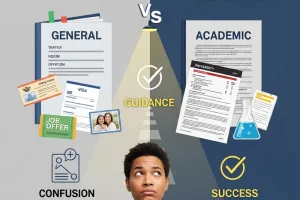
IELTS Reading is also scored using a raw-score-to-band conversion chart, but the charts differ between Academic and General Training tests. General Training Reading is considered slightly easier, so you need more correct answers to achieve the same band.
Academic Reading Conversion Chart
| Correct Answers (out of 40) | Band Score |
|---|---|
| 39-40 | 9.0 |
| 37-38 | 8.5 |
| 35-36 | 8.0 |
| 33-34 | 7.5 |
| 30-32 | 7.0 |
| 27-29 | 6.5 |
| 23-26 | 6.0 |
| 19-22 | 5.5 |
| 15-18 | 5.0 |
General Training Reading Conversion Chart
| Correct Answers (out of 40) | Band Score |
|---|---|
| 40 | 9.0 |
| 39 | 8.5 |
| 37-38 | 8.0 |
| 36 | 7.5 |
| 34-35 | 7.0 |
| 32-33 | 6.5 |
| 30-31 | 6.0 |
| 27-29 | 5.5 |
| 23-26 | 5.0 |
Notice the difference: To achieve Band 7.0, Academic Reading requires 30-32 correct answers, while General Training requires 34-35 correct answers.
The most effective way to improve Reading scores is through targeted Reading practice that focuses on question types where you consistently make errors (e.g., True/False/Not Given, matching headings).
To calculate your overall band score from individual module scores, use the IELTS Band Score Calculator.
Why Most Test-Takers Plateau at Band 6.5 (and How to Break Through)
67% of IELTS test-takers score between Band 6.0 and 6.5, according to official statistics published by Cambridge Assessment. This plateau happens because:
1. Limited Vocabulary Range (Lexical Resource)
Band 6 users rely heavily on common, everyday vocabulary. They use “important” repeatedly instead of varying it with “significant,” “crucial,” “vital,” or “pivotal.” They write “people think” instead of “individuals believe,” “researchers argue,” or “critics contend.”
Solution: Build a “paraphrase bank” of 50-100 high-frequency IELTS topics (education, environment, technology) with 5-10 synonyms and collocations for each. Practice using them in context, not just memorizing lists.
2. Poor Paragraph Structure (Coherence and Cohesion)
Band 6 essays often lack clear topic sentences, use mechanical connectors (“Firstly, Secondly, Finally”), and jump between ideas without smooth transitions. Examiners struggle to follow the argument.
Solution: Master the PEEL paragraph structure (Point, Evidence, Explanation, Link). Every body paragraph should start with a clear topic sentence stating your main point, followed by supporting evidence and explanation.
3. Grammatical Errors That Obscure Meaning
Band 6 candidates make frequent errors in tense consistency, subject-verb agreement, and article usage. While communication isn’t completely broken, these errors reduce clarity and distract examiners.
Solution: Identify your top 3-5 error patterns through AI feedback or examiner correction. Focus practice specifically on those patterns rather than trying to fix everything at once.
4. No Access to Examiner-Level Feedback
The biggest problem: most test-takers practice without detailed, criterion-specific feedback. They write 20 essays but never know if their Lexical Resource improved from 5.5 to 6.5. They speak for hours but don’t realize their Fluency score is held back by repetitive connectors.
Solution: Use AI-powered platforms that provide instant band scores on all four criteria, highlight specific errors (not just generic “grammar mistakes”), and show you Band 8/9 rewrites so you understand what improvement actually looks like.
Stuck at Band 6.5 for months and don’t know why? Langogh’s AI Examiner analyzes your Speaking and Writing responses against official band descriptors, identifies your exact weaknesses (Is it vocabulary? Grammar? Coherence?), and creates a personalized improvement plan-just like a human examiner, but in 60 seconds instead of 3 days.
Try Your Free AI Band Score Assessment →
The Real Difference Between Band 7 and Band 8 (It’s Bigger Than You Think)
Jumping from Band 7 to Band 8 requires exponential improvement, not linear improvement. Here’s what changes:
Band 7 Performance
- Writing: Addresses all parts of the task with a clear position. Uses a range of vocabulary and grammar with flexibility. Frequent error-free sentences but some noticeable mistakes remain.
- Speaking: Speaks at length without obvious difficulty. Uses less common vocabulary and some idiomatic language. Produces frequent error-free sentences.
- Example: “Technology has significantly improved communication in modern society. People can now connect with others across the world instantly, which was impossible twenty years ago.”
Band 8 Performance
- Writing: Sufficiently addresses all parts with well-developed, relevant ideas. Sequences information logically with sophisticated cohesion. Uses a wide range of vocabulary and structures with rare errors.
- Speaking: Speaks fluently with only rare repetition. Uses vocabulary naturally and precisely. Produces mostly error-free sentences with sophisticated structures.
- Example: “Technological advancements have fundamentally transformed the paradigm of interpersonal communication in contemporary society. The advent of instantaneous global connectivity-unimaginable merely two decades ago-has engendered both unprecedented opportunities for cross-cultural dialogue and complex challenges regarding authentic human connection.”
Notice the differences:
- Vocabulary sophistication: “significantly improved” → “fundamentally transformed the paradigm”
- Grammatical complexity: Simple compound sentences → Complex sentences with embedded clauses and nominalization
- Idea depth: Surface-level observation → Nuanced analysis with acknowledgment of complexity
Achieving Band 8 requires 200-300 hours of intensive, feedback-driven practice-not just passive reading or listening.
How Computer-Delivered IELTS Affects Your Band Score
Many candidates wonder: Does the test format (paper-based vs. computer-delivered) affect band scores?
Answer: The band descriptors and scoring criteria are identical, but the computer-delivered IELTS format offers several practical advantages:
- Easier text editing in Writing: Cut, paste, and reorganize paragraphs without messy cross-outs
- Word count tracking: Real-time counter ensures you meet the 150/250 word requirements
- Better Listening concentration: High-quality headphones block distractions
- Faster results: Band scores available in 3-5 days instead of 13 days
Disadvantage: Some candidates find typing more tiring than handwriting for 60 minutes, and you can’t underline or circle keywords in Reading passages (you must use the highlight tool).
Practicing with AI-powered mock tests that replicate the computer interface exactly helps you adapt and perform confidently on test day.
Proven Strategies to Improve Your Band Score in Each Module
For Listening (Goal: 35+ correct answers for Band 8)
- Practice spelling: 30% of Band 6.5 candidates lose marks due to spelling errors in common words
- Master prediction: Read questions during preparation time and predict answer types (number? name? adjective?)
- Don’t leave blanks: Guess if you miss an answer; no negative marking
- Focus on keywords: Circle question keywords and listen for synonyms in the audio
For Reading (Goal: 30+ correct in Academic for Band 7)
- Skim first, scan second: Spend 2-3 minutes skimming the passage before attempting questions
- Match question types to strategies: True/False/Not Given requires different approach than Matching Headings
- Time management: 20 minutes per passage maximum
- Vocabulary in context: Learn to infer meaning from context instead of memorizing 10,000 words
For Writing (Goal: Band 7+ in all four criteria)
- Plan for 5 minutes: Outline your main ideas and supporting evidence before writing
- Use topic sentences: First sentence of each body paragraph should state your main point clearly
- Vary sentence structures: Mix simple, compound, and complex sentences (don’t use only complex sentences)
- Proofread: Reserve 3-5 minutes to check verb tenses, articles, and subject-verb agreement
For Speaking (Goal: Band 7.5+ in Fluency and Lexical Resource)
- Record yourself: Compare your pronunciation and fluency to Band 8 sample answers
- Build idea banks: Prepare 10-15 flexible stories/examples that answer common Part 2 topics
- Practice extending answers: Don’t give one-sentence responses; explain, give examples, compare
- Use signposting language: “Let me explain why…”, “For instance…”, “On the other hand…”
For comprehensive module-specific guidance, review:
- IELTS Listening Practice Guide
- IELTS Reading Practice Guide
- IELTS Writing Practice Guide
- IELTS Speaking Practice Guide
Real Success Story: From Band 6.5 to Band 7.5 in 8 Weeks
Meet Sarah, a 27-year-old nurse from the Philippines applying for Canadian immigration. She needed CLB 9 (IELTS Band 7.0 in all modules) for maximum Express Entry points but was stuck at:
- Listening: 7.0
- Reading: 6.5
- Writing: 6.0 (bottleneck)
- Speaking: 6.5
- Overall: 6.5
Sarah had already taken the test twice, spending $500 in test fees plus another $800 on a human tutor who gave vague feedback like “use better vocabulary” and “organize better.”
What Changed?
Sarah switched to Langogh’s AI-powered preparation platform and focused on criterion-specific improvements:
Week 1-2: Diagnostic Analysis
- Took 3 full AI mock tests to identify exact weaknesses
- Discovered her Writing bottleneck: Coherence and Cohesion (Band 5.5) and Lexical Resource (Band 6.0)
- Identified Speaking issue: Limited range of connectives causing repetitive transitions
Week 3-5: Targeted Practice
- Practiced 20 Writing Task 2 essays with instant AI scoring on all four criteria
- Used Band 9 Rewrite feature to see exactly how examiners would improve her sentences
- Built a paraphrase bank of 100 topic-specific vocabulary items
- Practiced 15 Speaking Part 2 responses with AI feedback on fluency and vocabulary
Week 6-8: Refinement and Test Simulation
- Took 5 full-length computer-delivered mock tests under timed conditions
- Reduced grammatical errors by 60% through pattern-focused correction
- Improved paragraph structure using PEEL methodology
- Achieved consistent Band 7.5-8.0 scores in AI mock tests
Final Test Result (Official IELTS):
- Listening: 8.0 (+1.0)
- Reading: 7.5 (+1.0)
- Writing: 7.0 (+1.0) ✅
- Speaking: 7.5 (+1.0)
- Overall: 7.5
Total investment: $99 for 2-month Langogh subscription vs. $1,300 already spent on previous attempts and tutoring. Result: Met CLB 9 requirement and gained 50 additional Express Entry points.
The key difference: Instant, detailed, criterion-specific feedback on every practice attempt, allowing Sarah to focus her limited study time (2 hours/day after work) on the exact skills that would raise her band score.
How Langogh’s AI Platform Accelerates Your Band Score Improvement
Traditional IELTS preparation faces three critical problems:
- Feedback delay: Human tutors take 24-48 hours to grade essays and provide feedback
- Vague corrections: Generic comments like “improve your grammar” without identifying specific error patterns
- High cost: $50-100/hour for quality human tutors; most test-takers can’t afford 50+ hours
Langogh solves these problems through AI-powered examiner simulation:
For Writing
- Instant band scoring: Get scores for all four criteria (Task Response, Coherence, Lexical Resource, Grammar) in 60 seconds
- Criterion-specific feedback: “Your Lexical Resource is Band 6.0 because you used ‘important’ 5 times. Replace with: crucial (academic), pivotal (formal), vital (strong emphasis)”
- Band 9 Rewrites: See exactly how your Band 6 sentences would be rewritten at Band 8-9 level
- Error pattern analysis: Identify your top 5 grammatical weaknesses across 20 essays
For Speaking
- Virtual examiner simulation: Practice all 3 parts with realistic AI interviewer
- Fluency analysis: Get specific feedback on hesitation patterns, repetition, and self-correction
- Vocabulary assessment: Discover which topics lack lexical range
- Pronunciation scoring: Identify specific phonemes causing comprehension issues
For Listening and Reading
- Adaptive question banks: 1,000+ questions matching official test difficulty
- Answer explanation: Understand why your answer was wrong and what keyword you missed
- Performance tracking: See your accuracy trends by question type
Full-Length Mock Tests
- Computer-delivered format: Exact replica of official IELTS interface
- Timed conditions: Build stamina and time management
- Comprehensive band prediction: Overall and module-specific score estimates
- Progress tracking: Compare mock test scores over time to measure improvement
Ready to stop guessing and start improving with data-driven feedback? Join 50,000+ IELTS candidates who’ve used Langogh’s AI platform to break through Band 6.5 and achieve their target scores 3x faster than traditional methods.
Start Your Free IELTS Mock Test Now →
Frequently Asked Questions About IELTS Band Scores
What is the IELTS band score system and how does it work?
The IELTS band score system ranges from 1 (Non-User) to 9 (Expert User), measuring your English proficiency across four modules: Listening, Reading, Writing, and Speaking. Each module receives an individual band score, and these are averaged (rounded to the nearest 0.5) to produce your Overall Band Score. Universities and immigration authorities typically require specific band scores in each module, not just the overall score.
Why do I keep getting Band 6.5 in IELTS Writing?
Band 6.5 plateaus typically occur due to limited vocabulary range (using simple words repeatedly), poor paragraph organization (weak topic sentences and transitions), and grammatical errors that obscure meaning. According to Cambridge Assessment data, 67% of test-takers remain stuck between Band 6.0-6.5 because they practice without receiving detailed, examiner-level feedback on these specific criteria.
How many correct answers do I need for Band 7 in IELTS Listening and Reading?
For IELTS Listening, you typically need 30-32 correct answers out of 40 to achieve Band 7. For IELTS Academic Reading, 30-32 correct answers usually result in Band 7, while General Training Reading requires 34-35 correct answers for the same band. These conversion charts can vary slightly between test versions.
What’s the difference between Band 7 and Band 8 in IELTS Speaking?
Band 7 speakers use a range of vocabulary with some flexibility and produce frequent error-free sentences, though some grammatical mistakes occur. Band 8 speakers demonstrate wide vocabulary range used naturally and flexibly, rare grammatical errors, and effortless fluency with only occasional repetition or self-correction. The jump requires significantly more natural, nuanced language production.
Can AI feedback really help me improve my IELTS band score?
Yes, when properly designed. AI-powered IELTS platforms like Langogh provide instant, examiner-level feedback on all four criteria for Writing and Speaking, identifying specific weaknesses (grammar patterns, vocabulary gaps, coherence issues) that human tutors might miss or take days to assess. This immediate feedback loop allows you to correct errors and practice more effectively, reducing the typical 3-6 month improvement timeline significantly.
Conclusion: Your Roadmap from Band 6.5 to Band 7+ Starts Now
Understanding the IELTS band score system is the foundation of strategic preparation. Now you know:
- What each band descriptor means and what examiners look for at Bands 6, 7, and 8
- Why 67% of test-takers plateau at Band 6.5 (limited vocabulary, poor coherence, no feedback)
- Exactly how many correct answers you need in Listening and Reading for your target band
- The four Writing and Speaking criteria that determine your scores
- Proven strategies to improve each module systematically
The difference between wasting another $250+ on test fees and achieving your target score in your next attempt comes down to one thing: quality, criterion-specific feedback that identifies and fixes your exact weaknesses.
Stop practicing blindly. Start improving strategically with AI-powered examiner feedback that shows you exactly what Band 7+ performance looks like-and how to get there fast.
For comprehensive IELTS preparation resources and strategies, visit the IELTS Preparation Hub.
Frequently Asked Questions
Find answers to common questions about this topic
The IELTS band score system ranges from 1 (Non-User) to 9 (Expert User), measuring your English proficiency across four modules: Listening, Reading, Writing, and Speaking. Each module receives an individual band score, and these are averaged (rounded to the nearest 0.5) to produce your Overall Band Score. Universities and immigration authorities typically require specific band scores in each module, not just the overall score.
Band 6.5 plateaus typically occur due to limited vocabulary range (using simple words repeatedly), poor paragraph organization (weak topic sentences and transitions), and grammatical errors that obscure meaning. According to Cambridge Assessment data, 67% of test-takers remain stuck between Band 6.0-6.5 because they practice without receiving detailed, examiner-level feedback on these specific criteria.
For IELTS Listening, you typically need 30-32 correct answers out of 40 to achieve Band 7. For IELTS Academic Reading, 30-32 correct answers usually result in Band 7, while General Training Reading requires 34-35 correct answers for the same band. These conversion charts can vary slightly between test versions.
Band 7 speakers use a range of vocabulary with some flexibility and produce frequent error-free sentences, though some grammatical mistakes occur. Band 8 speakers demonstrate wide vocabulary range used naturally and flexibly, rare grammatical errors, and effortless fluency with only occasional repetition or self-correction. The jump requires significantly more natural, nuanced language production.
Yes, when properly designed. AI-powered IELTS platforms like Langogh provide instant, examiner-level feedback on all four criteria for Writing and Speaking, identifying specific weaknesses (grammar patterns, vocabulary gaps, coherence issues) that human tutors might miss or take days to assess. This immediate feedback loop allows you to correct errors and practice more effectively, reducing the typical 3-6 month improvement timeline significantly.
Related Articles